Water Safety & Rescue Training Courses For Industry
Professionally delivered Rescue3 Swiftwater Rescue Training, Water Safety Cover and Training for the industry sector
Industrial Water Safety Training, Water Safety Cover & Water Rescue Services Across the UK
Protecting People Working On, In and Around Water
Working near water is an unavoidable part of many industries, from civil engineering and construction to environmental consultancy, utilities and infrastructure maintenance. Rivers, canals, reservoirs, lakes, docks, flood defences and coastal environments all present hazards that require specialist knowledge, effective planning and competent personnel.
Without suitable training and emergency arrangements, even routine tasks can quickly become high-risk operations.
At Water Rescue, we help organisations work safely around water by providing specialist industrial water safety training, Rescue 3-accredited courses, operational water safety cover, rescue planning and consultancy services throughout the United Kingdom.
Our experienced instructors and rescue professionals support organisations across the public and private sectors, helping them reduce risk, improve workforce competence and ensure projects are delivered safely from planning through to completion.
Whether you require accredited training for your workforce, qualified rescue technicians to provide safety cover on a live project, or specialist advice when developing rescue plans and safe systems of work, Water Rescue has the experience, capability and operational knowledge to support your project.
Why Choose Water Rescue?
Our courses for industry are widely regarded as some of the most effective and professionally delivered water rescue training programmes in the UK.
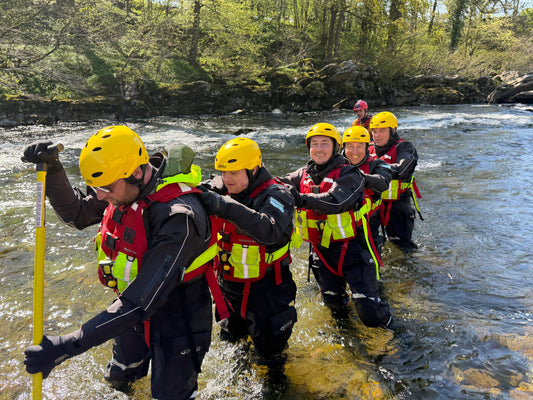
Built around internationally recognised DEFRA-aligned standards and Rescue 3 methodologies, our courses combine strong theoretical foundations with highly realistic, scenario-based practical training in rivers, flood environments and open water.
Whether you are planning a bridge replacement, ecological survey, reservoir inspection, flood defence project or utility installation, our experienced team can help you protect your workforce and manage water-related risks effectively.
Contact Water Rescue today to discuss industrial water safety training, Rescue 3-accredited courses, water safety cover, rescue consultancy or project-specific support anywhere in the UK.
Clients choose Water Rescue because of our practical approach, experienced instructors and commitment to delivering training that reflects real operational challenges.
Our strengths include:
- Rescue 3-accredited training
- Experienced operational instructors
- Nationwide delivery
- Bespoke industry training
- Rescue consultancy
- Water safety cover
- Practical learning
- Flexible delivery
- Site-specific programmes
- Ongoing client support
- High-quality equipment
- Strong safety culture
Our aim is simple: to help organisations reduce risk while enabling people to work confidently and safely around water.
"As a marine-based civil engineering company we encounter many risks within our working environment. Water Rescue provided us with training that, while covering the Rescue 3 syllabus, was tailor-made to the conditions we face and incorporated our past experiences to create a more engaging and relatable learning experience. My team has been given first-class training to carry out their work safely and I feel more confident in our ability to handle situations, whether that’s responding to an emergency or implementing preventative measures to reduce risks on our sites."
- Sam Cook, Director, Cook Piling
Why Industrial Water Safety Matters
-
Every year, workers across the UK carry out thousands of tasks in close proximity to water. These may include bridge inspections, river restoration, ecological surveys, utility maintenance, flood defence works, dredging, piling, asset inspections and environmental monitoring.
While many of these activities appear routine, water introduces hazards that are often underestimated. Fast-flowing currents, unstable banks, deep water, tidal changes, hidden obstacles, cold water shock, entrapment, slips, trips and falls all increase the likelihood and severity of incidents.
-
Unlike many workplace hazards, emergencies in or near water develop rapidly. Rescue often needs to happen within minutes, making preparation, competence and planning essential.
Industrial water safety is not simply about compliance. It is about protecting lives, reducing operational risk, safeguarding business continuity and ensuring employees return home safely every day.
Courses You Can Trust
Water Rescue works extensively across the industry to keep people safe and develop a strong safety culture. We act as consultants for risk assessment, provide safety cover and deliver a range of Rescue 3 courses to meet your needs.
We support businesses by providing safety cover and staff training across the whole of the UK.
Nearly all our work in this area is bespoke to our clients, where we go to you and design a programme around your unique requirements.
Investing in this area ensures you are both compliant and safe. Many tenders now insist on training people to at least Defra level 2. A strong safety culture pays dividends; you become the organisation to work with as your key stakeholders know you can be trusted.
Additional benefits are transferable skills/knowledge for life and a brilliant shared experience for all participants.
-
Rescue 3 Europe Training Provider
Water Rescue delivers internationally recognised Rescue 3 training programmes developed specifically for personnel working around water.
Rescue 3 qualifications are widely recognised across industry and emergency services and provide structured learning pathways for organisations seeking nationally recognised competence.
Training combines internationally recognised standards with extensive real-world operational experience.
-
Examples of some of the organisations we have recently worked with:
- JBA
- Marine Scotland
- SEPA
- The Environment Partnership
- Cubby Construction
- Maysons Construction
- McLaughlin and Harvey
- Orchard Tree Surgery
- Eden Rivers Trust
- Grosvenor Estates
- Caledonian Conservation
- ….and many, many more!
Courses may include:
- Safe Working Near Water
- Safe Working In Water
- Water and Flood Awareness
- Water Rescue First Responder
- Rescue Boat Operations
- Water Rescue Technician programmes
- Instructor development programmes
Courses For Industry
-
-
-
-
Ice Field Safety Training Course
Vendor:Rescue 3 -
-
-
-
-
Safe Working in Water - Scheduled Course
Vendor:Rescue 3Regular price £375.00 GBPRegular priceSale price £375.00 GBPExcludes VAT
-
Safe Working Near Water - Scheduled Course
Vendor:Rescue 3Regular price £500.00 GBPRegular priceSale price £500.00 GBPExcludes VAT
-
Defra Mod 2 - Swiftwater and Flood First Responder - Scheduled Course
Vendor:Rescue 3Regular price £420.00 GBPRegular priceSale price £420.00 GBPExcludes VAT
-
Safe Working in Water (2 Days) - Scheduled Course
Vendor:Rescue 3Regular price £250.00 GBPRegular priceSale price £250.00 GBPExcludes VAT
Comprehensive Industrial Water Safety Solutions
-
We provide a complete range of services that help organisations manage water-related risk throughout the lifecycle of a project.
Whether you require support for a one-day survey or a multi-year infrastructure programme, our team can provide a tailored solution.
Our services include:
- Industrial water safety training
- Safe Working Near Water courses
- Safe Working in Water courses
- Emergency response planning
- Site-specific rescue plans
- Operational water safety cover
- Rescue boat operations
- Rescue equipment advice
- Project safety support
-
Supporting Compliance and Good Practice
Working near water requires organisations to carefully assess risks and implement suitable control measures.
Our services help clients strengthen their arrangements by supporting:
- Workforce competence
- Site-specific planning
- Emergency preparedness
- Practical rescue capability
- Risk management
- Safe systems of work
- Ongoing training
- Operational resilience
Rather than providing generic solutions, we tailor our recommendations to each project and working environment.
Industries We Support
Construction and Civil Engineering
Construction remains one of the highest-risk sectors for water-related incidents. On our courses, we frequently hear about near misses or significant serious accidents.
Projects frequently involve work around rivers, canals, reservoirs, ports, flood alleviation schemes and coastal environments where conventional workplace safety procedures may not adequately address water hazards.
-
Training focuses on practical risk management, emergency procedures and developing competence for personnel working in these environments.
Example:
Scour survey in Carlisle:
- The site had a 28-day order of completion as it involved a railway line running over the river.
- The previous contractor was removed from the site due to unsafe practices.
- Fluctuating water levels, January.
- Full risk assessment undertaken
and RAMS produced. - We developed 4 systems of work that allowed us to provide safety cover and undertake the survey in low, medium, and high flows, which involved access by: Free Wade, Tethered Wade, Hand-Held Boats, and Tethered Boats.
Project completed ahead of time, zero incidents
-
We support:
- Bridge construction
- Bridge inspections
- Piling operations
- Cofferdam works
- River engineering
- Marine civil engineering
- Flood defence construction
- Temporary works
- Utilities installation
- Drainage infrastructure
- Highway maintenance
- Structural inspections
Environmental Consultancy
Environmental professionals often work in isolated locations with rapidly changing conditions.
Ecologists, hydrologists, fisheries specialists and environmental consultants may enter rivers, streams or wetlands while conducting surveys, collecting samples or inspecting habitats.
Our training provides practical skills in hazard recognition, dynamic risk assessment, self-rescue techniques and emergency response, as well as support with ecological surveys in hard-to-reach locations.
-
Examples of clients we work with:
- Eden River Trust
- Natural England
- Atlantic Salmon Trust
- JBA Consulting
- Freshwater Biological Association
-
- Tyne Rivers Trust
- Buglife West Cumbria Rivers Trust
- Environmental Resources Management
- SEPA
Utilities
Utility companies operate extensive infrastructure around water environments.
We support organisations involved projects such as:
- Reservoir inspections
- Treatment works
- Pumping stations
- Drainage assets
- Watercourse maintenance
- Electricity infrastructure
- Renewable energy projects
- CSO outflows
Example:
- Assistance with the installation of CSO monitoring equipment in Leeds.
- Difficult to access location on the island.
- Fluctuating river levels, in winter,
- The client is up against a tight timeframe due to new legislation demanding installation by a certain date.
We provided a floating solution to transport
engineers and ensure equipment safety across the water course. Also provided PPE, including industrial drysuits and lifejackets.
Project completed on time.
Infrastructure
Infrastructure owners and principal contractors manage assets located alongside water throughout the UK.
These include:
- Rail infrastructure
- Highways
- Canals
- Ports
- Harbours
- Airports
- Industrial estates
- Flood resilience infrastructure
We work alongside project teams to ensure water-related risks are effectively managed from mobilisation through to project completion.
Industrial Water Safety Training
-
Effective training builds confidence, improves decision-making and equips workers with practical skills that can prevent incidents before they occur.
Unlike purely classroom-based learning, our courses combine theory with realistic practical exercises that replicate genuine workplace situations.
Delegates develop competence through supervised scenarios designed around their operational environment.
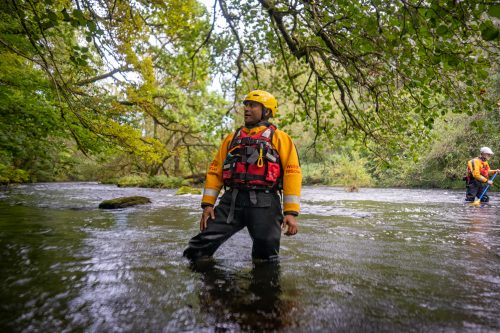
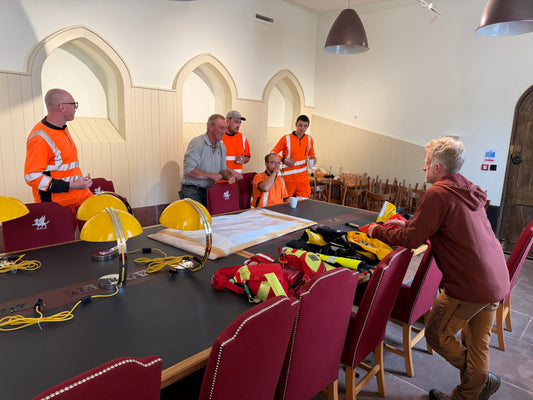
Training is delivered at our facilities or your workplace, allowing scenarios to reflect your operational environment.
-
Training topics include:
- Hazard recognition
- Safe access and egress
- Working near rivers
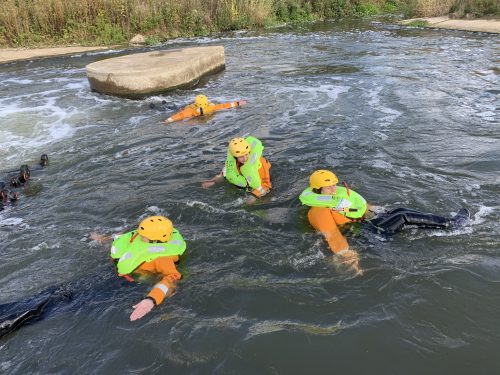
- Working in moving water
- Manual handling around water
- PPE selection
- Buoyancy aids
- Life jacket choice and maintenance
- Throwline techniques
- Rescue principles
- Dynamic risk assessment
- Incident management
- Emergency communications
- Casualty care
- Self-rescue
- Team rescue awareness
Professional Water Safety Cover
Many projects require dedicated rescue capability throughout operational activities.
We have rescue sleds, soft inflatable boats, rafts and pontoons for inland work and use coded boats with qualified skippers for coastal operations
Our water safety teams provide experienced rescue technicians capable of responding immediately should an incident occur.
Our rescue teams become part of your project, working alongside contractors while maintaining continuous emergency preparedness.
-
Typical deployments include
- River engineering
- Dam inspections
- Reservoir maintenance
- Ecological surveys
- Bridge inspections
- Utility installations
- Film production
- Sporting events
- Infrastructure maintenance
-
Services include
- Rescue boats
- Swiftwater rescue technicians
- Bank safety teams
- Rescue equipment
- Communications
- Daily operational briefings
- Dynamic risk assessments
- Rescue planning
- Medical response integration
Industry Course FAQs
Who needs industrial water safety training?
Anyone working on, in or near water, including engineers, ecologists, surveyors, contractors, inspectors and utilities personnel.
Who are these courses designed for?
Our industrial water safety courses are designed for anyone who works in, on or near water. This includes construction teams, environmental consultants, ecologists, utilities, highways, civil engineering contractors, ports, marine contractors, surveyors and infrastructure maintenance teams.
How do I know which course is right for my team?
The correct course depends on the level of water exposure and the work being carried out.
- Water Awareness – for staff who need an
understanding of water hazards. - Safe Working Near Water – for personnel working close to water but not intending to enter it.
- Safe Working in Water – for those entering shallow or moving water as part of their work.
- Basic Water Rescuer – for teams requiring enhanced rescue capability.
- Defra Module 2 First Responder – where organisations require flood or swiftwater response capability or when specified by tender documents
We're always happy to discuss your work activities and recommend the most appropriate training.
Can courses be delivered at our own site?
Yes.
Many of our industrial courses are delivered at client locations across the UK. Training can take place at your workplace, a suitable local water site or one of our established training venues.
Delivering training on your own site often allows us to use your equipment, procedures and working environment, making the learning more relevant.
The Water Awareness programme is Classroom based.
Lifejacket Awareness and Safety requires a classroom and access to water.
The Safe Working Near Water programme requires a classroom and access to water.
The Safe Working in Water programme requires a classroom plus moving water, deep and shallow.
Can you develop rescue plans?
Yes. We regularly assist organisations with rescue planning, emergency procedures
and risk assessments.
Is the training practical?
Absolutely. Practical exercises form a significant part of every programme.
Can the course be tailored to our industry?
Absolutely.
Nearly all of our industrial training is bespoke. We regularly adapt courses for:
- Construction
- Utilities
- Environmental consultancies
- Ecologists
- Highways
- Marine contractors
- Local authorities
- Conservation organisations
- Infrastructure maintenance
Training scenarios are based around the hazards your staff actually encounter.
Over the years we’ve worked with organisations from just about every field which allows us to relate our content to your environment.
Do delegates need to be strong swimmers?
No.
Many delegates are not confident swimmers.
Some practical exercises involve entering the water, but these are carefully supervised, use appropriate PPE and progress at a pace suitable for the individual.
Specific Rescue 3 qualifications may have minimum swimming requirements, which we'll advise during booking.
In some cases students may be awarded a lower level award if they can’t reach the assessment criteria.
What equipment is provided?
We provide all specialist PPE and rescue equipment required for the course,
including:
- Drysuits
- Buoyancy aids and lifejackets
- Helmets
- Boots
- Gloves
- Throw bags
- Rescue equipment
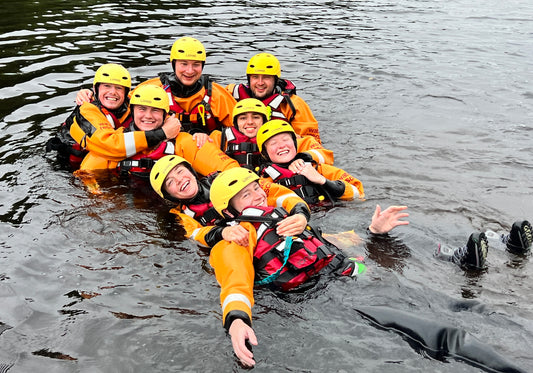
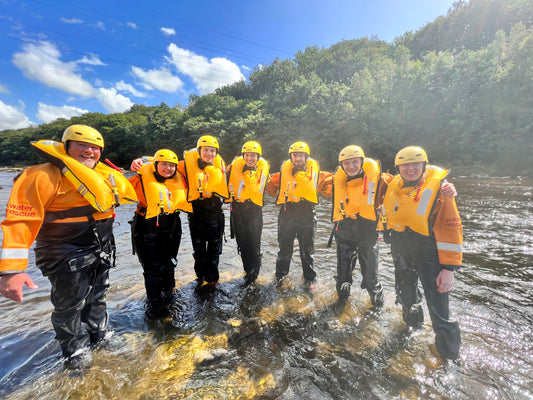
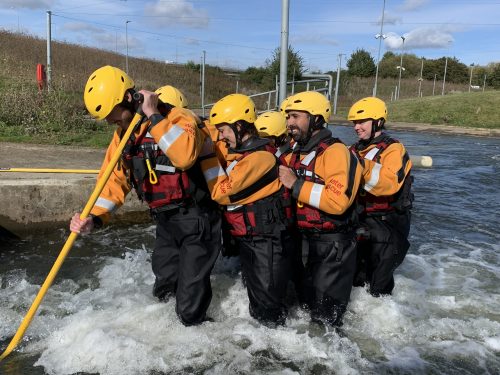
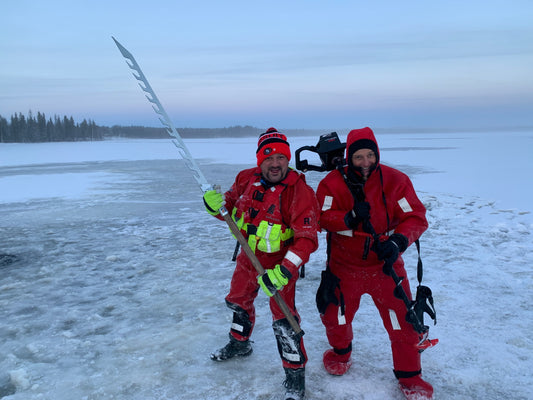
All our equipment is top quality, as can be seen from the pictures on this site. Delegates simply need suitable clothing to wear under a drysuit. Joining instructions are sent before the course to advise.
Are your instructors experienced?
Yes! Our instructors are simply the best you can find. They have extensive operational and instructional experience in water safety and rescue. They combine practical rescue expertise with years of delivering training to industry, emergency services and environmental organisations.
Can courses be customised?
Yes. Every organisation has different operational risks, and our courses can be
adapted accordingly.
Are the qualifications nationally recognised?
Absolutely, all our courses are accredited and lead to internationally recognised Rescue 3 qualifications.
Where appropriate, courses also align with current Defra guidance for working in and around water.
How many people can attend?
We keep group sizes small to maximise practical learning and instructor support.
For larger organisations, we can provide multiple instructors and run several courses simultaneously.
Our minimum numbers for most programmes are 4, groups sizes are capped at 8. More than 8? We bring in more instructors.
How long are the courses?
Course lengths vary depending on the qualification.
Typical durations include:
- Water Awareness – 3 hours
- Safe Working Near Water – 1 day
- Safe Working in Water – 2 days
- Basic Water Rescuer – 1 day
- Defra Module 2 – 2 days
Will the course help us meet our legal responsibilities?
Yes.
Employers have a duty to assess risks and provide suitable training for employees working around water.
Our courses support organisations in developing safer systems of work, improving emergency preparedness and demonstrating competence for clients and principal contractors.
Can you advise us before we choose a course?
Yes.
If you're unsure which level of training your organisation requires, simply contact us. We'll discuss your work activities, risk profile and objectives before recommending the most suitable programme.
Do you also provide water safety cover?
Yes.
Alongside training, we provide professional water safety management, rescue cover and consultancy for construction, environmental and infrastructure projects throughout the UK.
What should delegates bring?
We'll send full joining instructions before the course, but generally delegates should bring:
- Suitable outdoor clothing
- A change of clothes
- Towel
- Outdoor clothing – we may run some sessions dry outside
- Any personal medication
- Lunch (where not provided)
All specialist rescue equipment is supplied.


